
From the archive
What Sohrab Ahmari Has Failed to Sense

“Such specious reasoning is so problematic that it may well produce more of the existential instability Ahmari is keen to reject, rather than placate it.”
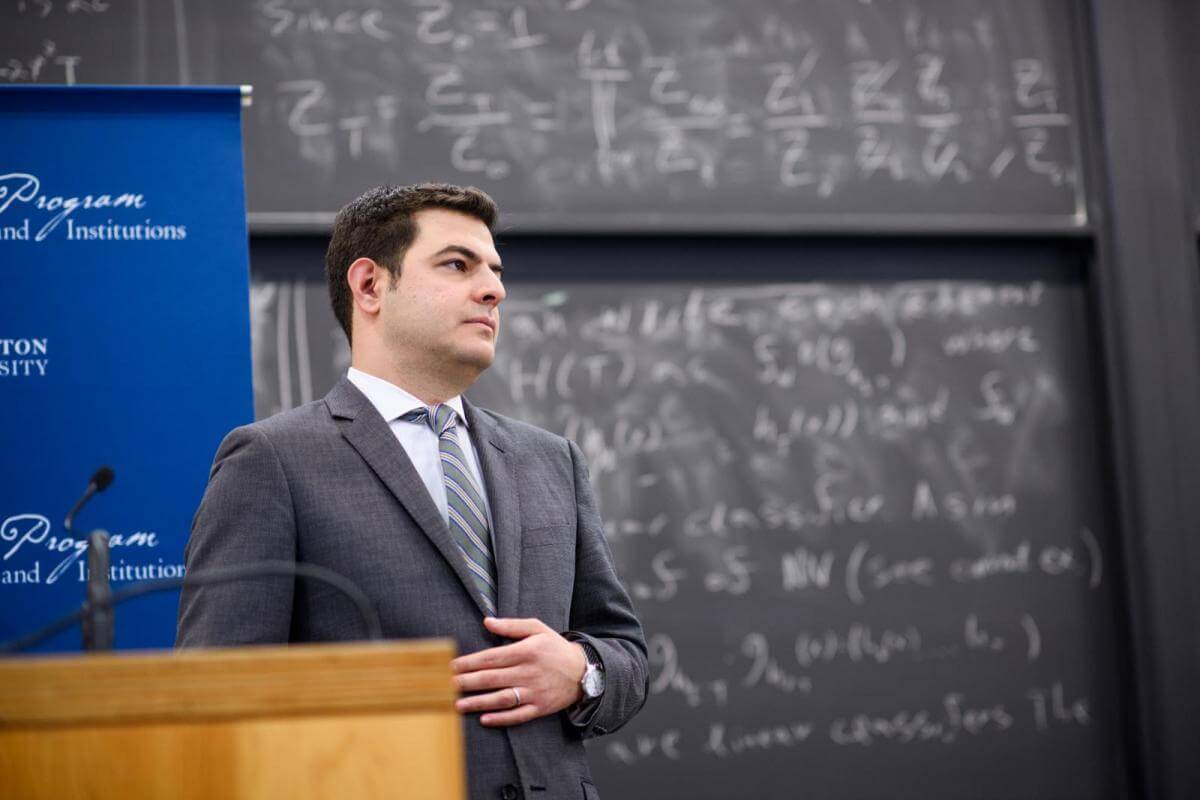
“Such specious reasoning is so problematic that it may well produce more of the existential instability Ahmari is keen to reject, rather than placate it.”
Introduction
Many have expressed surprise that—despite the relentless attacks of figures from Richard Dawkins to Christopher Hitchens—religion continues to play an important role in post-modern politics. The critical theorist Jürgen Habermas has even opined that we live in a post-secular age where religion must engage in an ongoing dialogue with scientific rationality to reinvigorate a sense of meaning which has been lost in the 21st century. Some have even gone considerably further and called for the retrenchment of religion as the bedrock of culture and politics. In an American context this position is perhaps most associated with Sohrab Ahmari, who has made contentious demands to move away from liberalism and back towards faith based traditionalism. These arguments have been very popular with some on the political right, who agree with his conclusions that we live in an era where people are increasingly adrift without a sense of meaning and stability. In this article, I will try to show why these arguments do not hold water beyond a certain threshold.
The Problems With Religion as a Source of Collective Order
“The former delusion of the happiness of life that had concealed from me the horror of the dragon no longer deceives me. No matter how much I tell myself that I cannot understand the meaning of life, that I should live without thinking about it, I cannot do this because I have done it for too long already. Now I cannot help seeing the days and nights rushing toward me and leading me to death. I see only this, and this alone is truth. Everything else is a lie.”
—Leo Tolstoy, A Confession
Perhaps the most common invocation of religion in today’s political environment (and the least admirable) is as a source of collective order. This position is best expressed by Ahmari, who has consistently decried the impact liberal freedoms have had across society. For those who regard religion as a source of collective order, the world appears as a potentially decadent and dangerous place which requires a strong degree of moral control and homogeneity to remain stable. Religious traditions provide this. With their collapse, one is left with a society fraying at the edges—and one where individuals push against their “natural limits” in a desire for ever greater private freedom. As Ahmari put it in an October 2019 essay for First Things:
“For the past two generations, American conservatives have been focused on liberty, first in the fight against communist totalitarianism, then in a more undifferentiated way in our resistance to “regulation.” But today our challenges are different. Our society is fragmented, atomized, and morally disoriented. The new American right seeks to address these crises—and to do so we need a politics of limits, not of individual autonomy and deregulation.”
The rest is for members.
All proceeds go toward publishing more writers and poets.
Free for 30 days, then $3 a month
Become a member
This work is preserved in Merion West’s archive of articles and poems published from 2016 through early 2025. Explore the archive