
From the archive
The Decline of the Intellectual Dark Web

“…if one truly believes that the better argument can and should win the day, more formidable ammunition will be needed on the part of the Intellectual Dark Web.”
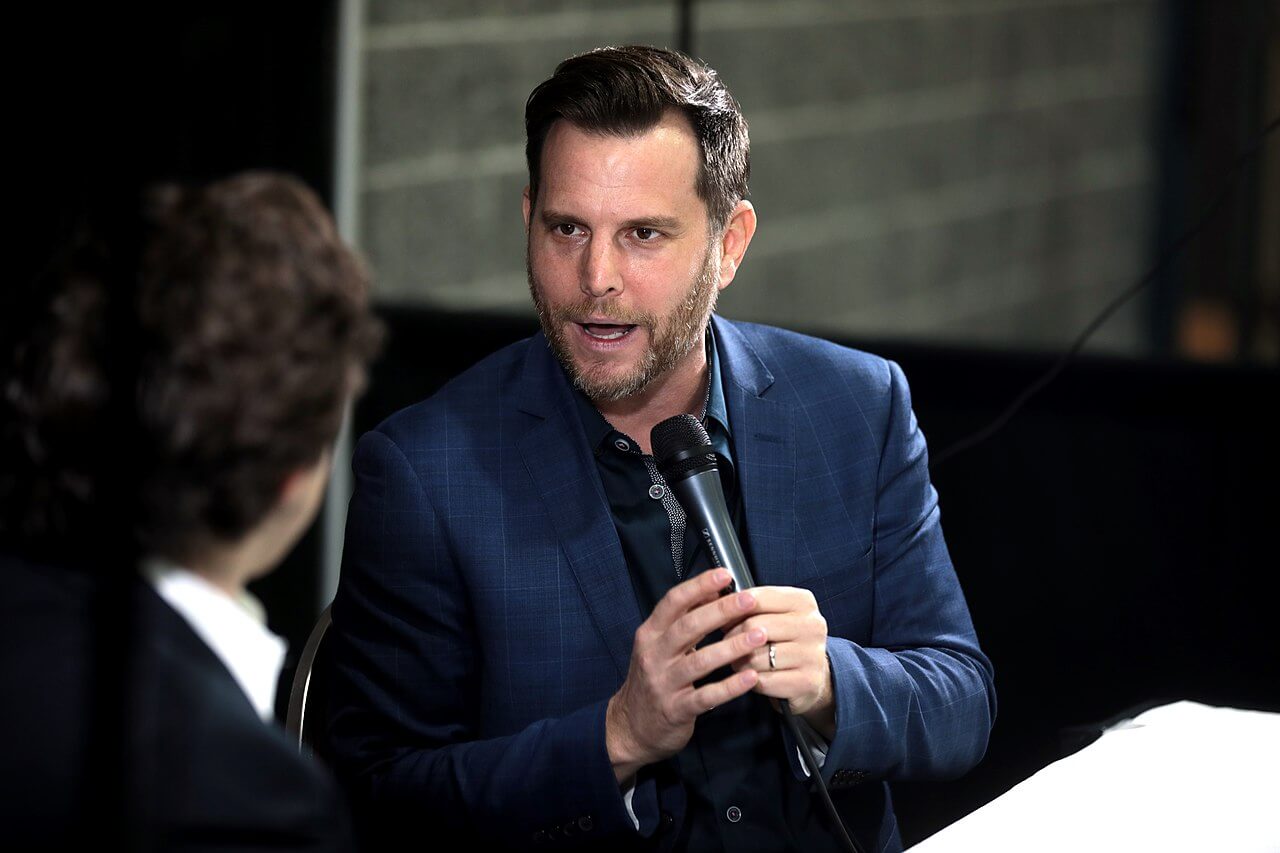
“…if one truly believes that the better argument can and should win the day, more formidable ammunition will be needed on the part of the Intellectual Dark Web.”
Introduction
Few movements were as interesting and culturally impactful in 2018 as the Intellectual Dark Web (IDW). Profiled in a much-debated May 2018 article in The New York Times, many saw the IDW as a cohesive and fresh movement that was pushing against stale political correctness and puritanism on behalf of free speech, open debate, and other liberal virtues.
Of course, this interpretation produced a great deal of criticism, with many damning the dark web for its perceived ties to the far-right; however, later commentators defended it as a fundamentally neutral or even a mostly progressive group of intellectuals who were simply pushing back against a dangerous but trendy variant of post-modern leftism. But as 2018 gave way to 2019, the criticisms became fiercer, and the tensions became more prominent. Sympathetic outlets such as Quillette began running pieces criticizing major IDW figures for not taking the Left and its arguments sufficiently seriously. Conservative outlets like The Federalist described the IDW as “collapsing under its contradictions.”
Then came several embarrassing revelations and takedowns, from Jordan Peterson’s quasi-admission that—despite being a consistent critic of some vague position called “post-modern neo-Marxism”—he had not read Marx for a very long time, a revelation notably explored by writers such as Ben Burgis. Then, there was Ben Shapiro’s disastrous interview with Andrew Neil. Finally, there were a number of studies and articles released, which suggested that—contrary to the IDW’s professions of ideological neutrality—many of its members served as gateways to far-right literature. This is, of course, not necessarily their fault; IDW members, after all, have no direct control over algorithms moving viewers and readers from Dave Rubin to Stefan Molyneux. Heterodox Academy—another IDW-friendly outlet—explained this phenomenon, while unpacking its own study on how Jordan Peterson’s viewers often gravitate to more extreme positions:
“For instance, Peterson wants us to remember the horrors of the communist regimes of Stalin and Mao in order to prevent us from repeating said horrors. He worries that many popular strains of leftist ideology predispose adherents, whether they recognize it or not, towards forcibly imposing their will on others via the state, suppressing dissent, etc. These are defensible arguments to make. Yet there is probably a way to do that without directly analogizing those one disagrees with to Stalin or Mao (which is also a popular tactic on the alt-right). Peterson et al. might similarly consider avoiding dismissive and derogatory labels like ‘SJW’ or ‘regressive left.’ This kind of language is extremely common on the alt-right. Indeed, opposition to ‘social justice warriors’ seems to be one of the main associations people in that arena draw between themselves and Jordan Peterson…Granted, Peterson’s opponents readily brand him—and his colleagues—as ‘racist,’ ‘sexist’ ‘transphobic,’ etc. It can be difficult not to villainize or caricature them in turn. Yet Peterson et al. explicitly aspire towards a higher level of discourse and rationality than they perceive among many of their interlocutors. Embodying and modeling these alternative forms of discourse, even in the face of such attacks, may help Peterson be more successful in his aim of pulling people away from the fringes instead of towards them.”
The consequence of these varied developments is impossible to predict, but there is little doubt it has not proven beneficial to the IDW. While claims by some commentators that interest in the IDW is declining should be greeted with skepticism until further research is conducted, the deepening criticism even from sympathetic analysts suggests it is worth looking at where things have gone wrong with the IDW. In this short article, I will present a few of the ways I believe the IDW undermined itself—or strayed from having the sort of impact many of its members aspired to.
The rest is for members.
All proceeds go toward publishing more writers and poets.
Free for 30 days, then $3 a month
Become a member
This work is preserved in Merion West’s archive of articles and poems published from 2016 through early 2025. Explore the archive