
From the archive
Thomas Friedman, Barack Obama, and the Longstanding Tumult in Syria

“Had Obama intervened strongly enough in 2013, Syria could have been his Bosnia, a long-running humanitarian disaster that a U.S. president halted after initially dragging his feet.”
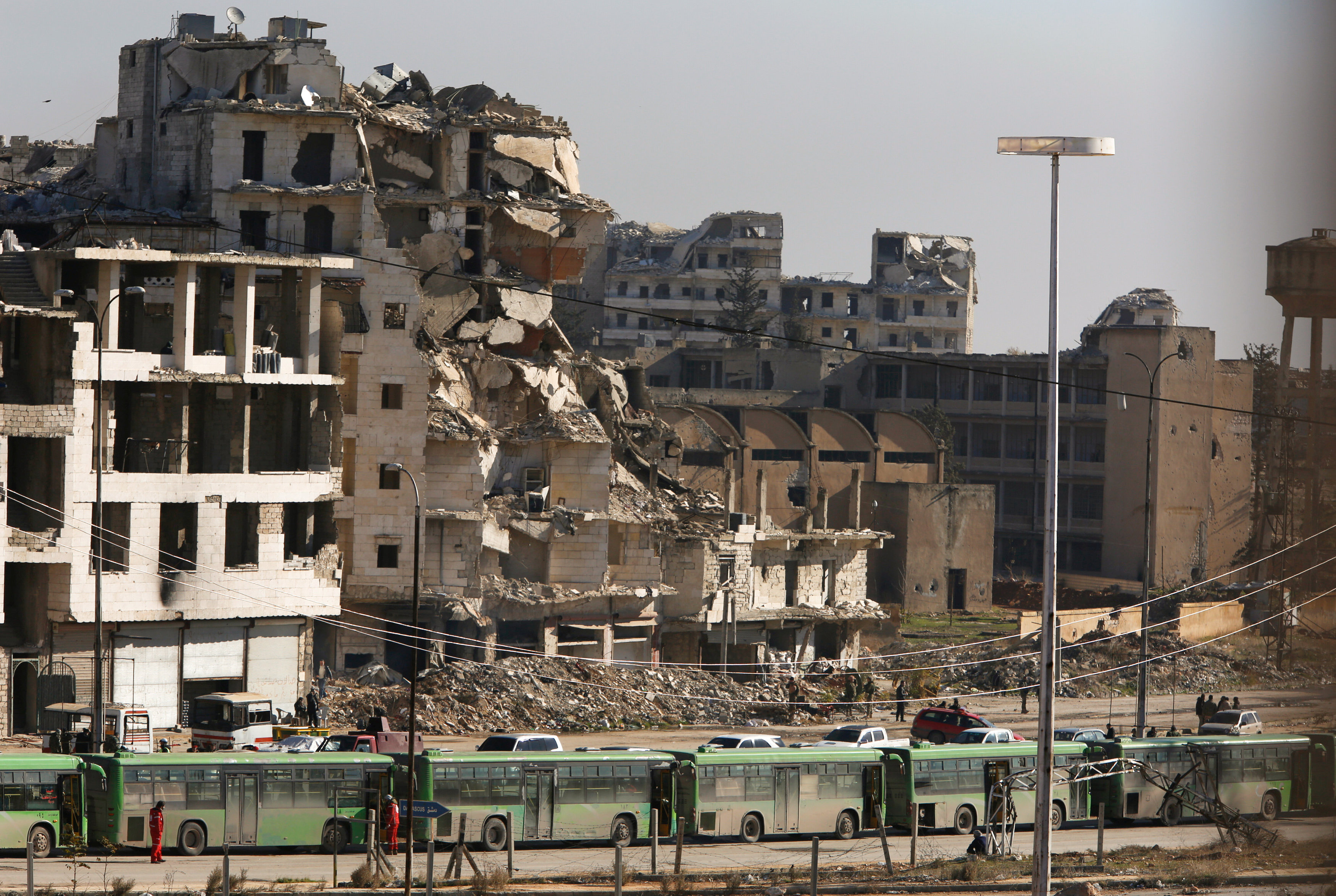
“Had Obama intervened strongly enough in 2013, Syria could have been his Bosnia, a long-running humanitarian disaster that a U.S. president halted after initially dragging his feet.”
It’s always been easy for foreign policy specialists of a skeptical bent to mock Thomas L. Friedman. Between his proselytizing for globalization, his relentless coining of new terms, his support for invading Iraq, and his repeated insistence that Iraq’s future would be decided in “the next six months” (one Friedman Unit), he became an easy target. The twentieth anniversary this year of The Lexus and the Olive Tree, juxtaposing the wonders and worries of the modern world with the lure of the ancient and familiar, provides opportunities for further criticism. In a world still feeling the effects of the 2008 financial crisis, many of the book’s paeans to unleashed global market forces have not aged well.
But there’s a section of the book worth revisiting for other reasons. At the end of his chapter laying out his Golden Arches Theory of Conflict Prevention (the theory that no two countries with a McDonald’s go to war, discredited before the book was even published by NATO’s bombing of Serbia), Friedman imagines a conversation between U.S. Secretary of State Warren Christopher and Syrian dictator Hafez al-Assad. The Secretary lectures the strongman on how weak Syria has become without the Soviet Union to support it. Now, he has no choice but to play by American rules, especially the rules of the Golden Straightjacket. “Instead of superpowers, Hafez, there are Supermarkets.” Christopher ends by giving Assad his cell phone (“the latest model from Motorola, linked up with their new Iridium satellite system”) and tells him that while he can call if he wants to do business on Washington’s terms, he should otherwise expect to be ignored. Washington is too busy making the world safe for capitalism to pay attention to Syria.
Friedman’s Assad responds with even more of the slogans that Jacob Weisberg, reviewing the book upon its release, said made him, “sound like Jesse Jackson at a rally.” In the Middle East, “tribal bonds, not corporate bonds, still rule the day,” the dictator tells the diplomat. “Here the iron fist of the ruling tribe, not the hidden hand of the marketplace, still dominates politics.” Assad cannot afford to show any weakness, because if he does, he and his fellow Alawites will be overthrown by Syria’s Sunni majority. He then goes on to mock the U.S. for pretending it doesn’t care about him: “You’ve been here twenty-one times already, and you’ve been to Mexico once.” And he returns the Motorola, warning Christopher, “be careful when you press the SEND button. You never know what might happen…”
The rest is for members.
All proceeds go toward publishing more writers and poets.
Free for 30 days, then $3 a month
Become a member
This work is preserved in Merion West’s archive of articles and poems published from 2016 through early 2025. Explore the archive