
From the archive
Getting a Tattoo: Often an Unwise Decision

“This past Mother’s Day, in a survey of over 3,000 mothers who had tattoos, 51% of them said if they had to choose between removing a bad tattoo and receiving a new piece of jewelry (of equal value) as a gift, they would choose tattoo removal.”
“This past Mother’s Day, in a survey of over 3,000 mothers who had tattoos, 51% of them said if they had to choose between removing a bad tattoo and receiving a new piece of jewelry (of equal value) as a gift, they would choose tattoo removal.”
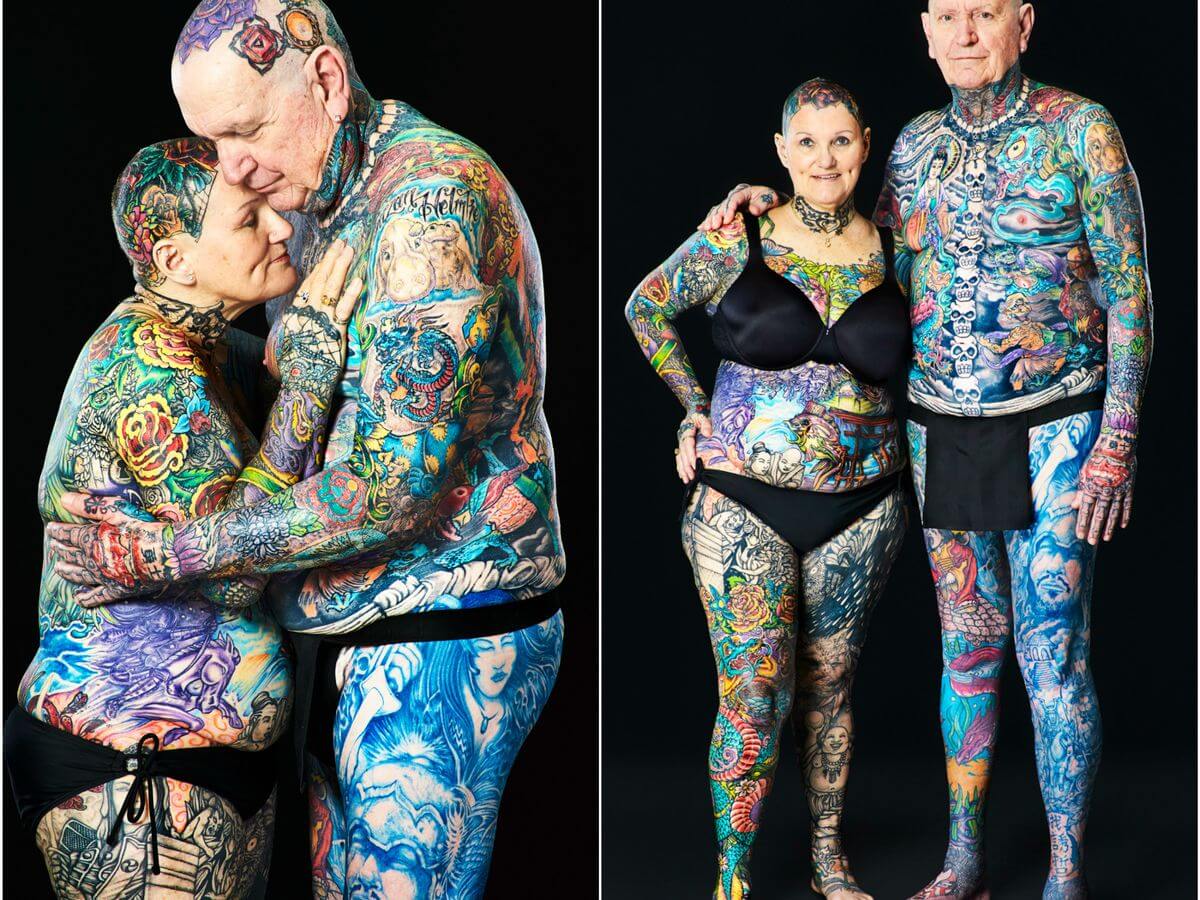
Some might describe Charlotte Guttenberg, the 70-year-old Florida woman the Guinness Book of World Records identified as the world’s most tattooed woman (and is pictured above), as mentally unstable. Others might conclude that she is a person who truly knows how to express herself. I don’t have tattoos; I’ve never had them, and I’ll never get them. But I must admit that I have always been intrigued by tattoos—or, more specifically, the question of why people choose to get them.
From ancient Egyptian women inking themselves for childbearing-related purposes to ancient Roman slaves and criminals being tattooed for identification and punishment, tattoos have been used for a variety of reasons historically. Within the United States, however, tattoos have become increasingly popular in recent decades, aided by the support of prominent figures, from athletes like Chris “Birdman” Andersen to Blink-182 drummer Travis Barker, who described getting tattoos, at least in part, to force him to succeed at music by taking away the fallback option of a normal desk job. According to “ink addict” Dan Hunter, people today get tattoos because they want to cover up flaws, they like the way a certain tattoo looks, or they want to express their individuality.
While tattoos might be on the rise, they still aren’t fully accepted in all circles of society. In 2010, 72% of adults who had tattoos hid them. In late October, Kathy-Rose Bullen, a 31-year old Australian woman, reported being unable to join the Melbourne Police Department due to her numerous tattoos, including tattoos that appeared on her hands and fingers; the Melbourne police force had indicated its belief that the extent of her tattoos was, “contrary to our requirement to portray a professional and disciplined image.” So, tattoos, despite being a longstanding practice in human societies, still can carry with them a slew of polarizing opinions. Perhaps this is why Professor Kristen Foltz of the University of Tampa has suggested that candidates interviewing for jobs would be well-served to cover up their tattoos.
The rest is for members.
All proceeds go toward publishing more writers and poets.
Free for 30 days, then $3 a month
Become a member
This work is preserved in Merion West’s archive of articles and poems published from 2016 through early 2025. Explore the archive