
From the archive
The Oversimplification of the American Founding

“Devotion to reading non-politicized history and putting it into context is necessary and something to which we should diligently commit.”
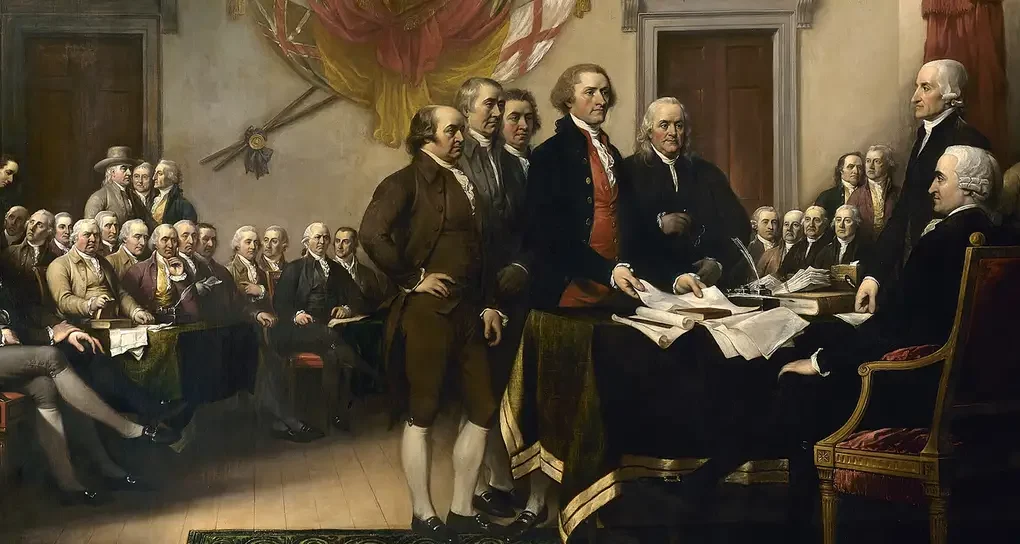
“Devotion to reading non-politicized history and putting it into context is necessary and something to which we should diligently commit.”
With vast amounts of historical documentation, one would think that when it comes to the Founding of the United States of America and the Founders themselves, there would be considerable shared beliefs. Yet this is not the case. Sometimes conversations or teachings about the Founders result in controversy—but why? A large reason for this concerns the great nuance and complexity surrounding America’s Founding Fathers, which is not conducive to soundbites, social media posts, or political quips. Therefore, answers to questions such as who was responsible for the Revolution, what was the reason for the colonists’ revolt, or what were the Founders’ beliefs about slavery tend to get oversimplified.
Examples of common quips are that a small group of men were responsible for the Revolution or that they started a war so they would not have to pay taxes. Questions about why we celebrate slaveholders arise, and the assertion that slavery was baked into the Constitution becomes a common thought. The New York Times’ 1619 Project asserts that The Revolutionary War began because the colonists wanted to protect the institution of slavery. At best, these arguments lack nuance and context; at worst, they are misleading and wrong.
To understand what the colonists and Founders believed, why they fought for independence, and how they approached the issue of slavery in the Constitution, we must first understand their ideology. Harvard historian and Pulitzer Prize winner Bernard Bailyn wrote what many consider the authority on the beliefs of the colonists and the Founders in his 1992 book titled The Ideological Origins of the American Revolution, to which I will be alluding.
The rest is for members.
All proceeds go toward publishing more writers and poets.
Free for 30 days, then $3 a month
Become a member
This work is preserved in Merion West’s archive of articles and poems published from 2016 through early 2025. Explore the archive