
From the archive
The Press and Violence against Asian-Americans

“It seems as though they will do anything to avoid actually backing approaches that would begin to remedy these problems, all of which start with taking a harder-line on those who routinely commit violent crimes.”
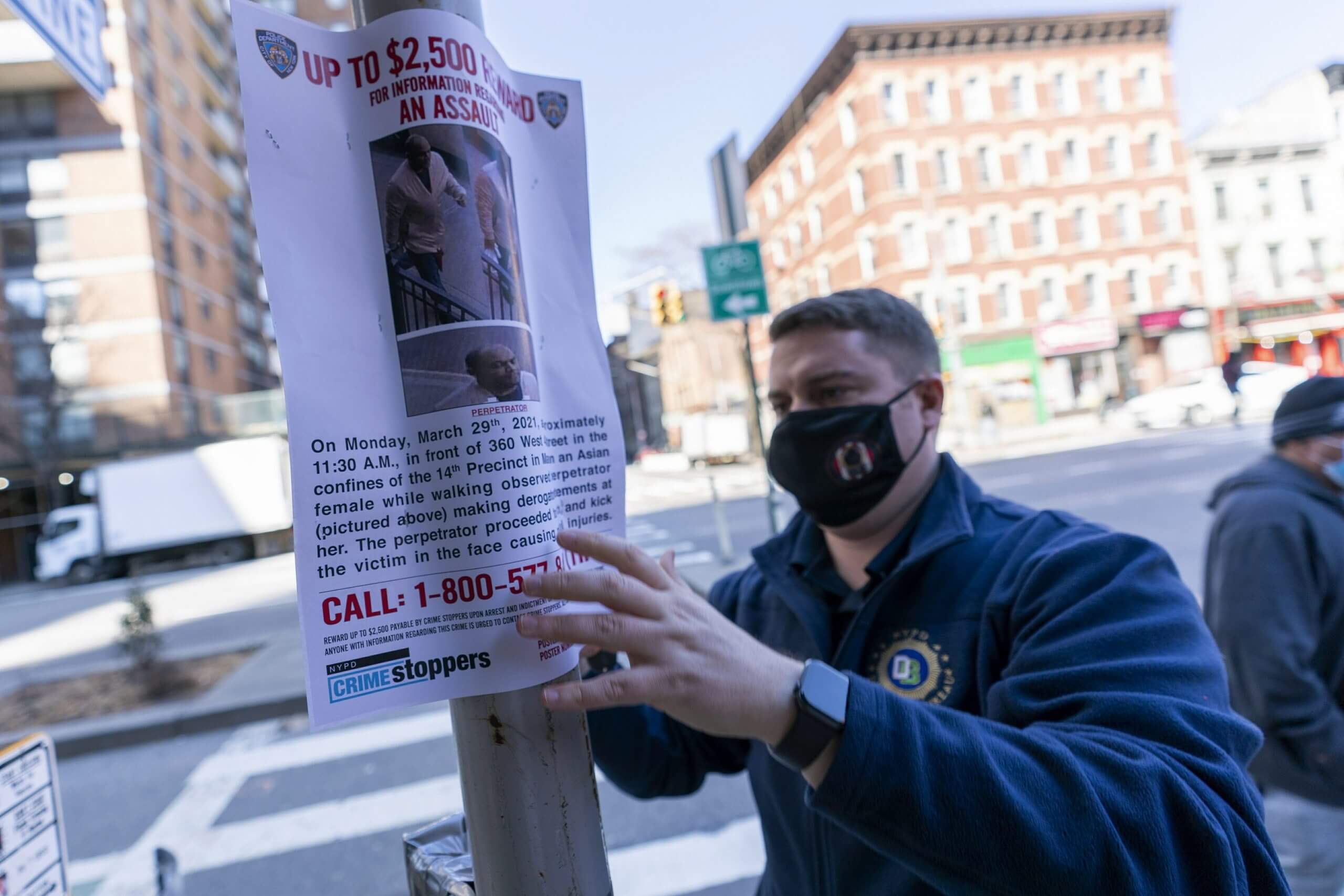
“It seems as though they will do anything to avoid actually backing approaches that would begin to remedy these problems, all of which start with taking a harder-line on those who routinely commit violent crimes.”
Naming Names
In May of 2018, Kyle Kashuv, a survivor of the Stoneman Douglas High School shooting that had taken place in Florida three months prior, authored an op-ed—co-written with Tyler Grant—arguing that when news outlets report on mass casualty shootings, they should refrain from naming or showing the likeness of the perpetrator. Asserting that a desire for notoriety was one of the primary motivators of mass shooters, the authors write, “…it’s imperative to snuff out the sinister aspirations of potential mass shooters by refusing to give perpetrators the notoriety and fame they seek.” In turn, the hope was that by removing this pathway to fame (and, thus, the concomitant sense of immortality), would-be mass shooters would think twice before acting, knowing that such acts of violence would no longer result in the world knowing their names.
Kashuv’s op-ed was hardly the first endorsement of this idea (it was being floated at least as early as 2012), and, by 2019, as Kelly McBride noted in a post on the Poynter Institute’s website, this had become basically the norm for news organizations. Commenting on the coverage of the May 31, 2019 mass shooting in Virginia Beach that left 12 people dead, McBride indicated that “As [news organizations] told the story of the 12 murders, the vast majority of newspapers and TV stations covering the tragedy embraced the practice of not using the shooter’s name unless it was absolutely necessary.” (This was true even of the above linked AP story released on the day of the incident.) McBride also pointed to this change in practice as evidence of the news industry’s alleged growing adaptability: “For an industry that is often criticized for being slow to change, this development is remarkable.” However, by the time of the Atlanta spa shootings on March 16th of this year, McBride seemed to have changed her tune. It had turned out, after all, that reducing the amount of coverage devoted to perpetrators was not the panacea that Kashuv and others had hoped it would be; mass casualty shootings were still taking place, and McBride was now outlining—on March 25th of this year—criteria news outlets should follow when determining “when a gunman should be named.” So much for a relatively minor change in reporting protocols putting an end to humanity’s oldest vice: a predilection for violence.
Further, this policy of diverting focus away from the perpetrators of crimes—like many untested changes in how things are done—produced a set of unintended consequences, in addition to predictably failing to put an end to gun violence. And I might also pause briefly to suggest that it is a betrayal of journalistic responsibility to begin making utilitarian calculuses such as with the one championed by Kashuv and a 2019 era McBride, rather than remaining committed to journalism’s fundamental purpose of providing as accurate and complete of information as is possible. (It also, in the process, betrays the profession’s staggering hubris, as journalism again reveals its unofficial mantra to be “I alone can fix this.”) In any event, this now-commonplace tendency of diverting focus away from the unique facts concerning a given perpetrator would be paired with the news media’s worst habit (i.e. jumping to conclusions), and this created a flurry of premature judgements in the aftermath of the March shooting in Atlanta.
The rest is for members.
All proceeds go toward publishing more writers and poets.
Free for 30 days, then $3 a month
Become a member
This work is preserved in Merion West’s archive of articles and poems published from 2016 through early 2025. Explore the archive