
From the archive
Growing Up with the Intellectual Dark Web

“It was around that time that I, a decidedly aimless and apathetic fifteen-year-old, would stumble upon a still somewhat blossoming The Rubin Report, along with The Joe Rogan Experience and Sam Harris’ podcast Making Sense.”
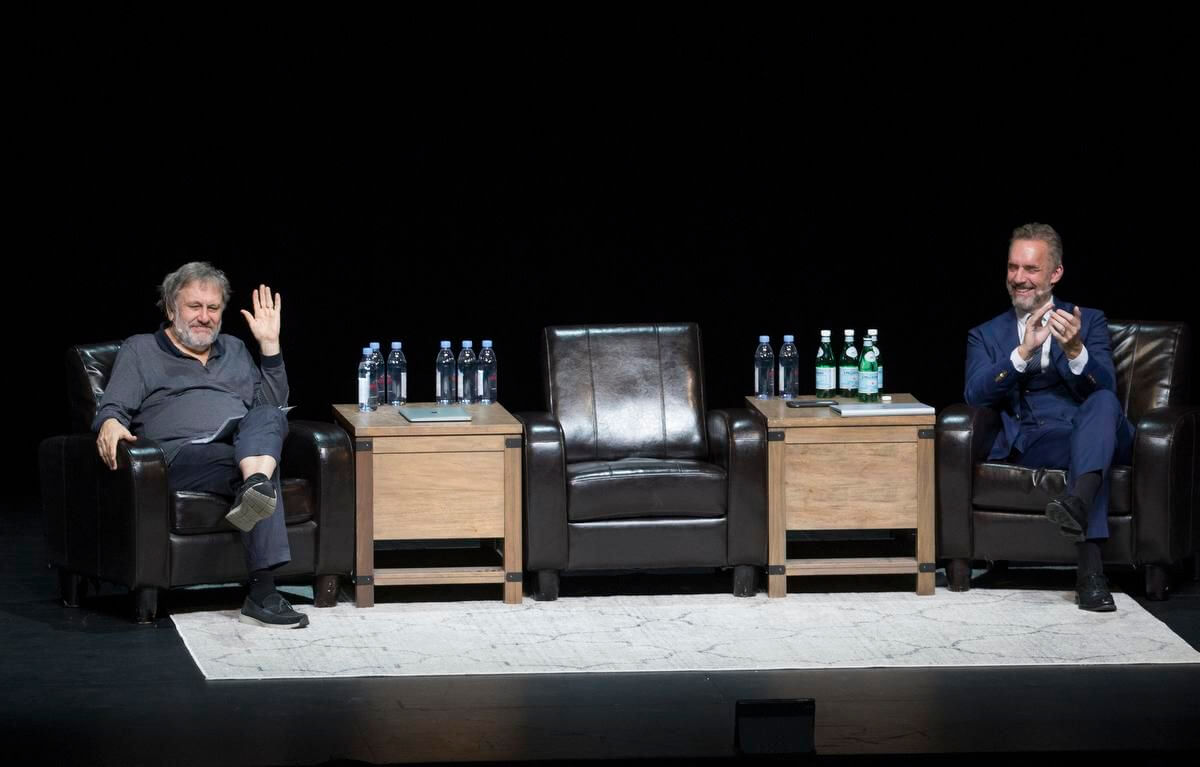
“It was around that time that I, a decidedly aimless and apathetic 15-year-old, would stumble upon a still somewhat blossoming The Rubin Report, along with The Joe Rogan Experience and Sam Harris’ podcast Making Sense.”
Nearly three years ago—in May of 2018—Bari Weiss authored a piece in The New York Times recognizing for the first time in any mainstream publication a certain group of loosely affiliated thinkers. This group was, of course, the counter-narrative force that Eric Weinstein had termed “the Intellectual Dark Web.” In the time since Weiss’ article ran, quite a lot has changed, and the Intellectual Dark Web (IDW) has been anything but spared from the seemingly unhaltable chaos of our age, despite its original conception as a force for making some ordered sense out of it all. Indeed, in many ways, the original members of this informal alliance against the dogmatic arrogance, general corruption, and cleverly-veiled coerciveness of the legacy media (and the intellectual dishonesty and laziness of blind adherence to ideology) have been unable to escape the very forces they had sought to oppose.
The IDW’s origins could perhaps be traced back to 2015, to the creation of Dave Rubin’s YouTube show The Rubin Report and then to the subsequent rise in notoriety of Jordan Peterson, Sam Harris, and Bret Weinstein for each of their respective scandals or, more precisely, for their impressive and necessary acts of moral courage. Still, it was not until these thinkers, along with Ben Shapiro, Eric Weinstein, and others, began having considerable and frequent discussions with each other that the IDW would fully come into its own in 2017 and 2018.
It was around that time that I, a decidedly aimless and apathetic fifteen-year-old, would stumble upon a still somewhat blossoming The Rubin Report, along with The Joe Rogan Experience and Sam Harris’ podcast Making Sense. This was an unlikely turn of events that I owe primarily to the controversy which befell former games journalist and podcaster Colin Moriarty for his 2017 tweet in which he made an innocuous joke on one of several now-sacred social justice holidays, International Women’s Day. Following the fallout of his withdrawal from the company and talk show he helped to create, he made appearances on The Rubin Report and The Joe Rogan Experience. What I had not realized at the time was the significance of the corner of the Internet I had fallen into: the larger world into which I had unwittingly stumbled. Making sense of the culture wars became my new favorite pastime. Indeed, I previously had no idea that people and their intellectual differences could be so interesting or that extended discussions about ideas could be so uniquely captivating.
The rest is for members.
All proceeds go toward publishing more writers and poets.
Free for 30 days, then $3 a month
Become a member
This work is preserved in Merion West’s archive of articles and poems published from 2016 through early 2025. Explore the archive