
From the archive
Nicholas Kristof Discusses “Tightrope: Americans Reaching for Hope”

“One of the reasons our anti-poverty efforts in America don’t do better is we start too late. We need to help kids early on.”
“One of the reasons our anti-poverty efforts in America don’t do better is we start too late. We need to help kids early on.”
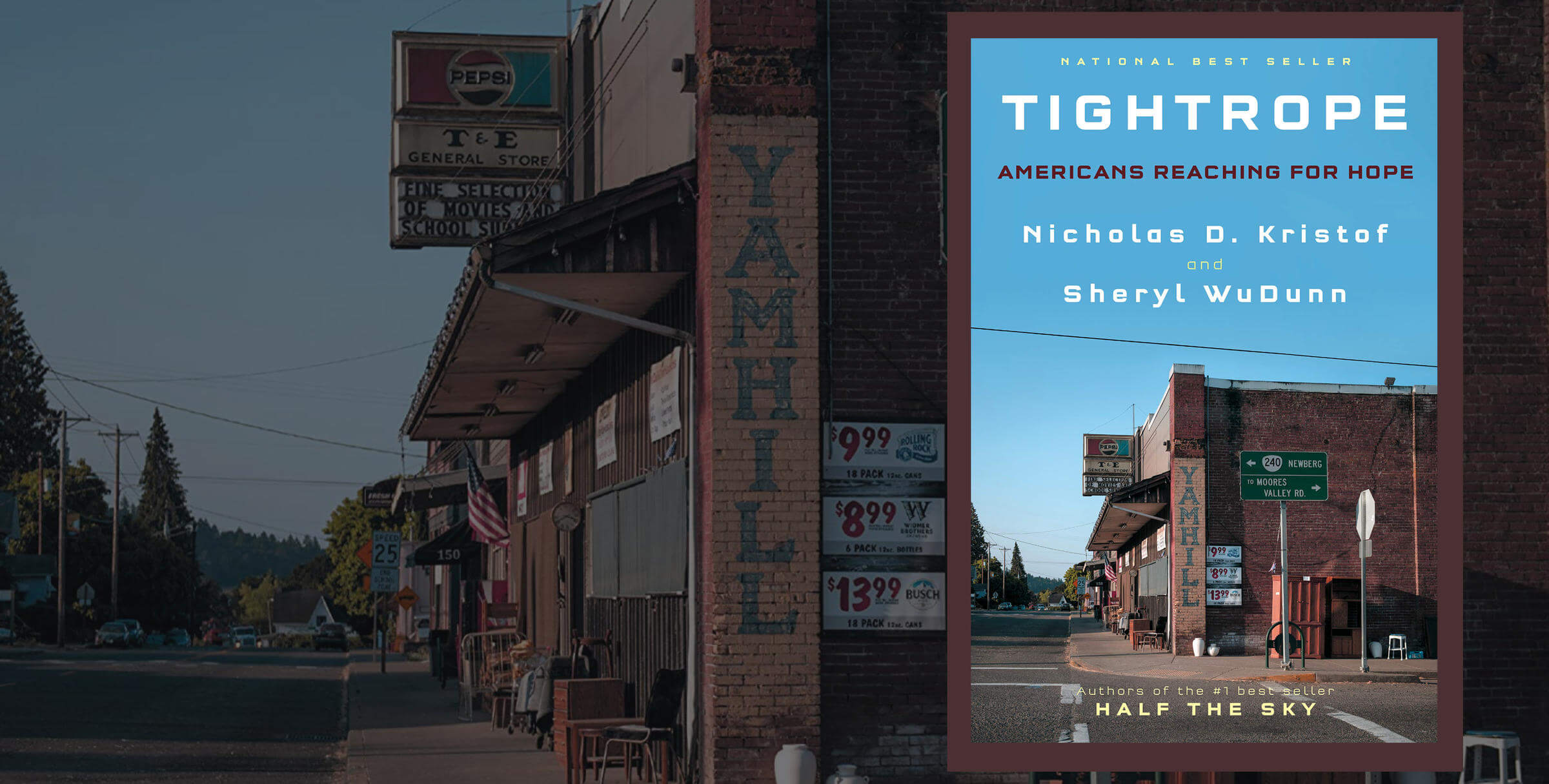
On February 27th, Thomas Koenig was joined by Nicholas Kristof for a conversation about Mr. Kristof’s book Tightrope: Americans Reaching for Hope, which was released in January of 2020. Mr. Kristof, who is a columnist at The New York Times, co-wrote Tightrope with his wife, Sheryl WuDunn, a businesswoman and author. In their book, Mr. Kristof and Ms. WuDunn seek to understand various social pathologies that have become increasingly prevalent in the United States, particularly among the working class. Mr. Kristof’s hometown of Yamhill, Oregon features prominently in both his book and in this conversation. In his discussion with Mr. Koenig, Mr. Kristof describes how a decline in available jobs impacted towns such as Yamhill, the role of family and community in providing stability to people’s lives, and what policy measures might work best to stem the tide of addiction, premature death, and child poverty affecting many parts of the country.
A video of the conversation is available on YouTube.
Hi, I’m Tom Koenig, and I’m joined today by the Pulitzer Prize-winning New York Times columnist, Nicholas Kristof. Nicholas, thanks so much for joining me.
Delighted to be with you.
We’re here today to discuss your book, which you co-wrote with your wife Sheryl WuDunn, Tightrope: Americans Reaching for Hope. So I want to start with a very important, straightforward question. What’s your book about?
It’s about the disintegration of the working class in the United States over the last 50 years, and it’s told partly through the story of the kids who were on my old school bus, here in Yamhill, Oregon. I’m talking to you from Yamhill right now. It’s a farm town that had done very well for about a hundred years, and then jobs went away; people self-medicated with meth and alcohol. At this point, more than a third of the kids on my old school bus are gone from deaths of despair: drugs, alcohol, and suicide. So, we tell that story; we show how that is reflected in communities across the country and the degree to which I think working class Americans were abandoned by both parties, and what we can do to solve these problems.
The rest is for members.
All proceeds go toward publishing more writers and poets.
Free for 30 days, then $3 a month
Become a member
This work is preserved in Merion West’s archive of articles and poems published from 2016 through early 2025. Explore the archive