
From the archive
Review: “The Klondike Bake-Oven Deaths”

“In a novel to be released later this month, Hornblum—perhaps best known for his 1998 non-fiction book Acres of Skin, which centers on different events at Holmesburg Prison—retells the calamitous events of August, 1938.”
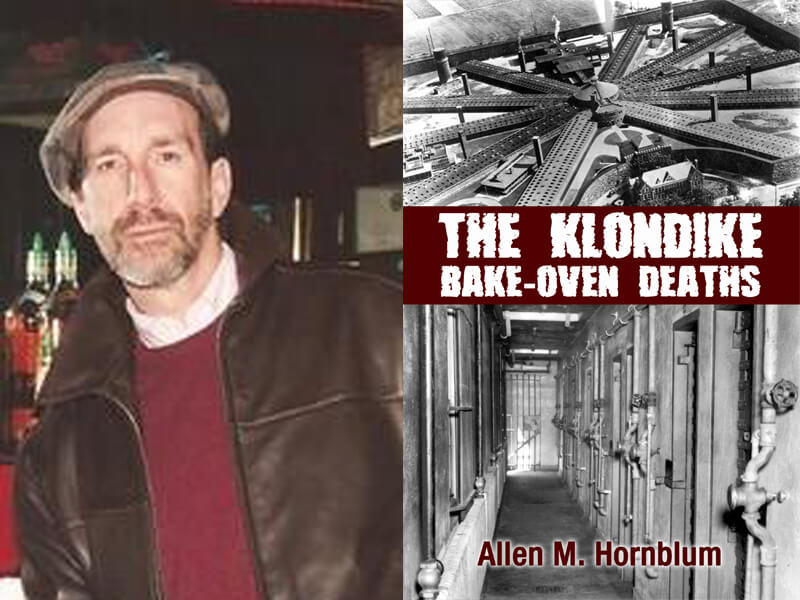
“In a novel to be released later this month, Hornblum—perhaps best known for his 1998 non-fiction book Acres of Skin, which centers on different events at Holmesburg Prison—retells the calamitous events of August, 1938.”
In August of 1938, inmates at Philadelphia’s Holmesburg Prison staged a hunger strike in protest of the quality of the prison’s meals and the general conditions of the penitentiary. The guards sent twenty-three men to the “Klondike” (Holmesburg’s version of “the hole”). The Klondike, a small building housing only twelve cells, was frequently employed as an isolation unit to punish prisoners deemed disruptive. In this instance, the guards closed the windows, turned off the water, and cranked up the heat, causing the temperature to rise to about 200 degrees Fahrenheit. A few days later, the guards opened the door to find four bodies that had been baked to death, with many of the other inmates unconscious and close to the same fate.
The world took notice, and the deaths of these four men were covered in newspapers such as The New York Times, The Philadelphia Inquirer, and Newsweek, the last of which gave the story three full pages. (Interestingly, also, this incident became the basis for the play Not About Nightingales, after a young Tennessee Williams, then just Thomas Williams, read news coverage of the events in Philadelphia.) Yet, though this was “described at the time [as] the worst case of prison abuse in American history,” according to author Allen Hornblum, the disastrous event from that hot August has slipped from our collective memory.
In a novel to be released later this month, Hornblum—perhaps best known for his 1998 non-fiction book Acres of Skin, which centers on different events at Holmesburg Prison—retells the calamitous events of August, 1938. (The events of the Klondike do make a brief appearance in Acres of Skin.) Branching out from his usual approach, however, Hornblum’s new novel, The Klondike Bake-Oven Deaths, though rooted in factual events, is a work of historical fiction. Unlike Hornblum’s previous books, many of which also focus on events in prisons (such as Sentenced to Science and Against Their Will), Hornblum here dabbles with pure storytelling.
In an interview for this piece, he described to me how he decided to undertake the “intellectual challenge” that accompanied his taking “a try at writing fiction.” In his own words, “it could be called what Truman Capote labeled in 1965 ‘a true crime novel,’ when he wrote his classic book In Cold Blood.” With that said, he did acknowledge, though, that “it’s probably going to be perceived as non-fiction because I stick very closely to the actual events as they occurred in 1938.” Rather than centering foremost on the “bake-oven deaths” themselves or the events leading up to them, the novel primarily focuses on the legal and political turmoil that ensues as the county coroner, Heshel Glass, investigates the case.
The rest is for members.
All proceeds go toward publishing more writers and poets.
Free for 30 days, then $3 a month
Become a member
This work is preserved in Merion West’s archive of articles and poems published from 2016 through early 2025. Explore the archive