
From the archive
Walter Lippmann and the Dilemma of Democracy
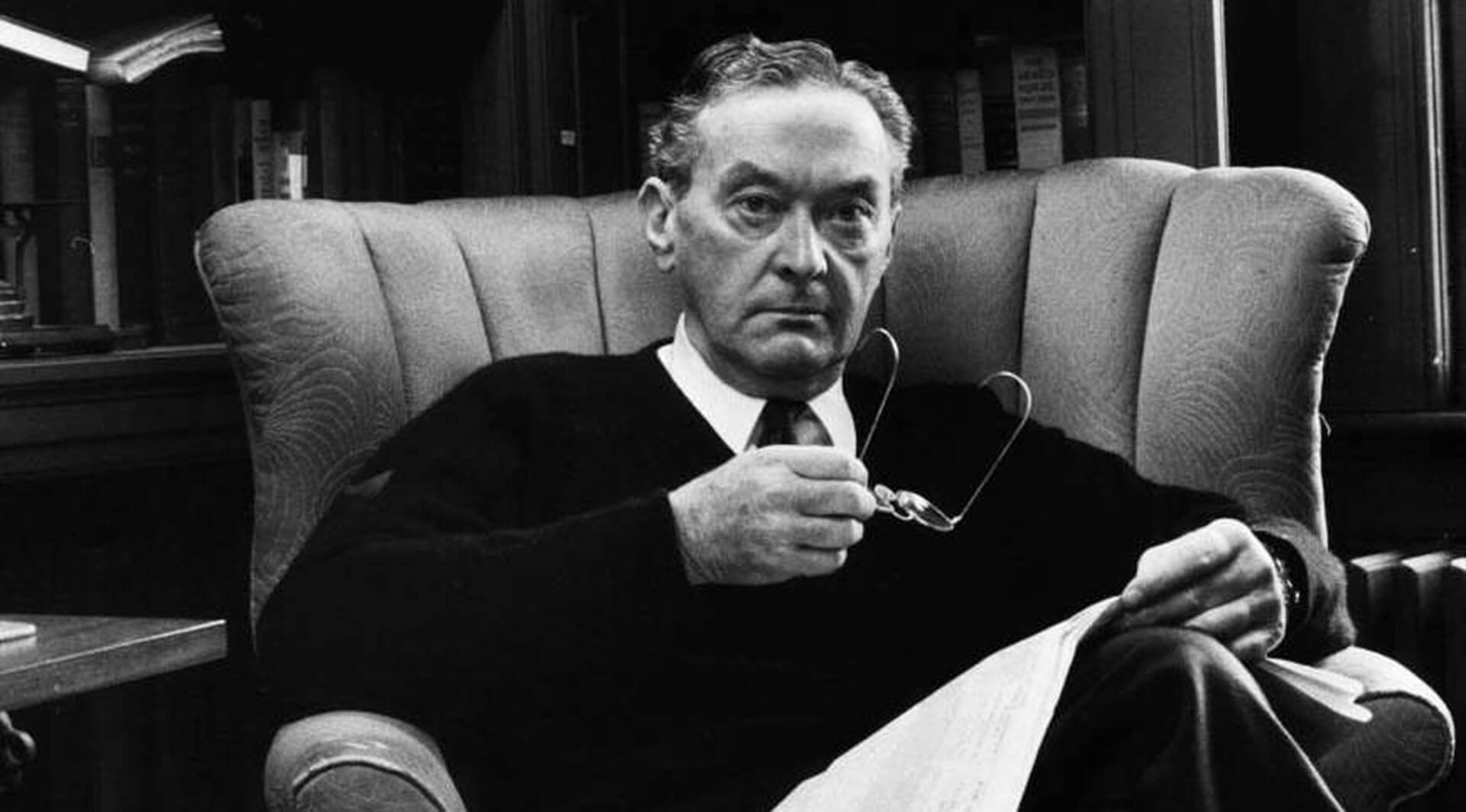
“In his 1922 book, Public Opinion, Lippmann notes that in a representative democracy, members of the public are expected to form opinions regarding public affairs with which they have no direct contact.”

“In his 1922 book, Public Opinion, Lippmann notes that in a representative democracy, members of the public are expected to form opinions regarding public affairs with which they have no direct contact.”
In recent weeks, concepts like truth and reality have dominated our public discourse. The extent to which many Americans occupy separate realities is staggering. Shared facts are in dispute. Common assumptions are under question. It is all a bit disconcerting.
As President Donald Trump denies the legitimacy of his electoral loss, he is propped up by a number of people who are arguing in bad faith. They know that the claims of widespread fraud are false, but they have figured out some way to rationalize their support of President Trump’s efforts. However, there are a great many others—millions of Americans—who are genuinely convinced of the “election was stolen” narrative. These are true believers. They are not dumb people, and they are not deplorable. They are fathers and mothers, neighbors and friends, pastors and executives. So, why do they believe the fiction?
Lippmann and “The Central Difficulty of Self-Government”
The dispute over the legitimacy of the 2020 election brings to light what the great American journalist Walter Lippmann referred to as “the central difficulty of self-government”: “the difficulty of dealing with an unseen reality.” None of us witnessed the casting and tabulation of every vote. How are we to trust that the election was above board? And for that matter, each of us is acutely attuned to very few (if any) of the intricate realities of the various issues that animate American politics. How are we responsibly to form an opinion about all of these matters and, then, act upon those opinions as citizens, activists, and voters?
In his 1922 book, Public Opinion, Lippmann notes that in a representative democracy, members of the public are expected to form opinions regarding public affairs with which they have no direct contact. “Now in any society that is not completely self-contained in its interests and so small that everyone can know all about everything that happens,” writes Lippmann, “[political] ideas deal with events that are out of sight and hard to grasp.” As such, citizens do not have immediate contact with the reality that informs their political opinions, for “the real environment is altogether too big, too complex, and too fleeting for direct acquaintance.” Without direct access to the entirety of the real environment on which political debates center, citizens are left constructing “pictures” of reality within their heads. They then go about forming their opinions regarding public affairs and acting on them on the basis of this “pseudo environment” or mental picture of reality, which they have constructed with the help of news media and government messaging and propaganda.
The rest is for members.
All proceeds go toward publishing more writers and poets.
Free for 30 days, then $3 a month
Become a member
This work is preserved in Merion West’s archive of articles and poems published from 2016 through early 2025. Explore the archive