
From the archive
Enduring Lessons from Early 20th Century Neuroscience

“More importantly to Cajal, however, is that theorists care more about telling a good story than giving it to us straight. When the current state of knowledge is disorganized and uninteresting, according to Cajal, that’s exactly what we should be saying.”
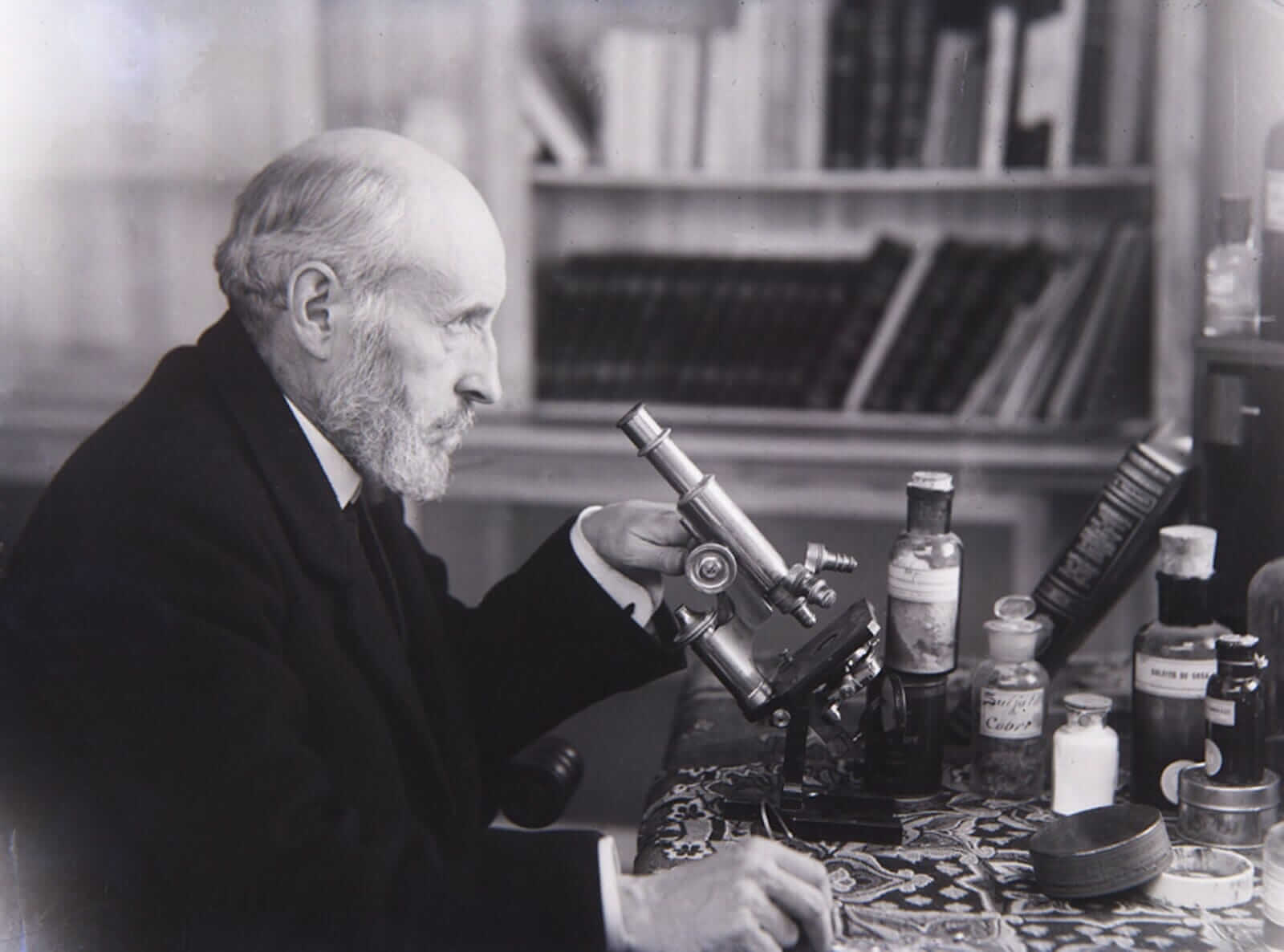
“More importantly to Cajal, however, is that theorists care more about telling a good story than giving it to us straight. When the current state of knowledge is disorganized and uninteresting, according to Cajal, that’s exactly what we should be saying.”
“What a cruel irony of fate to pair, like Siameses twins united by the shoulders, scientific adversaries of such contrasting character” – Santiago Ramon y Cajal on Camillo Golgi
Introduction
Santiago Ramon y Cajal and Camillo Golgi were like two peas in a pod. These Nobel Prize sharing titans of neuroscientific history cast a shadow that stretches well into the 21st century. Without their work, early pictures of the nervous system would have looked like Rorschach inkblots. Without them, we would not have so quickly resolved the neuron doctrine, the idea that the brain is an assembly of discrete cells rather than a singular interconnected network.
Golgi came first, discovering a new method of staining brain tissue for microscopy. Cajal, nine years younger, applied the method, dissecting, sectioning, staining, microscoping, and finally, creating truly beautiful images of nervous tissue structure.
In his writings, Cajal recognized the titan whose shoulders he was standing on; “The Savant of Pavia” he called him. But the relationship wasn’t all roses. After winning a fifty percent share of the Nobel Prize for Physiology or Medicine, Golgi prepared to deliver his lecture on the Neuron Doctrine. Cajal and other neuroanatomists impatiently twirled their mustaches and lubricated their monocles in enthusiastic anticipation. However, as the lecture began, it was clear to Cajal that he and Golgi were not so similar as he once thought. In this lecture, Golgi exposed himself to be everything that Cajal considered wrong with how people communicate science.
The rest is for members.
All proceeds go toward publishing more writers and poets.
Free for 30 days, then $3 a month
Become a member
This work is preserved in Merion West’s archive of articles and poems published from 2016 through early 2025. Explore the archive