From the archive
Free Speech on Campus (and Elsewhere): An Interview with Eugene Volokh

“Let’s say somebody is solidly in favor of abortion rights. She feels very strongly. Okay? But how can she learn to persuade anyone on the issue if she never even hears the other side of the argument?”
“Let’s say somebody is solidly in favor of abortion rights. She feels very strongly. Okay? But how can she learn to persuade anyone on the issue if she never even hears the other side of the argument?”
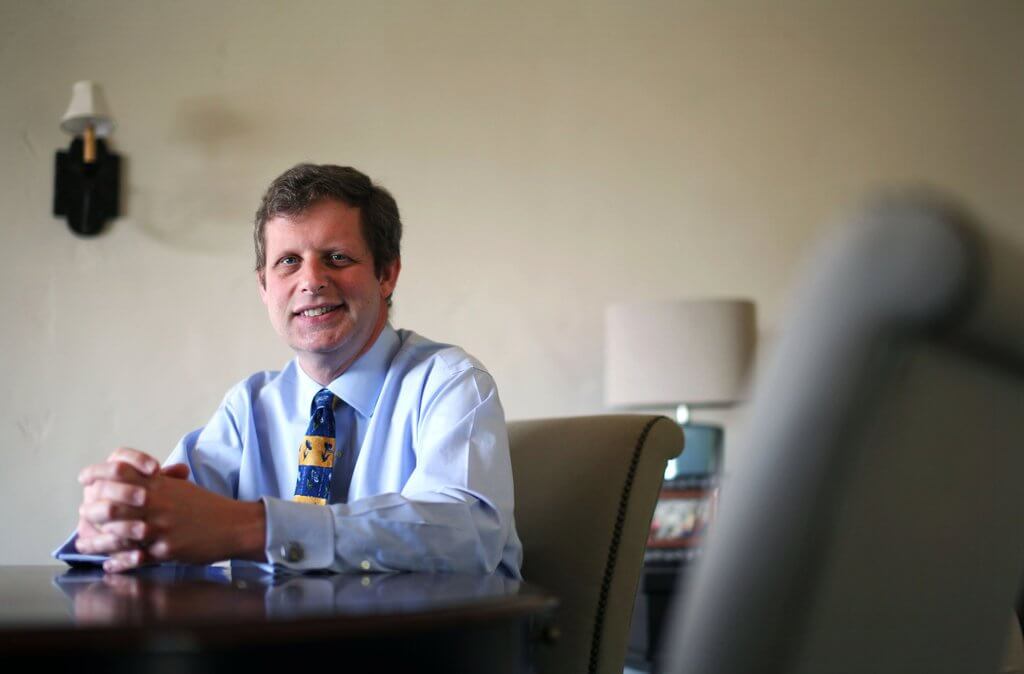
Eugene Volokh is a professor of law at the University of California–Los Angeles. He became well-known for his blog “The Volokh Conspiracy,” previously housed at The Washington Post and now appearing at Reason. He has commented broadly on First Amendment issues. The “influential conservative blogger,” as The New York Times called him, was cited by the late Antonin Scalia when writing the majority opinion for the Court in the landmark case District of Columbia v. Heller. On May 16th, he joined Merion West to discuss the issue of free speech today, from college campuses to the contentious issue of the video-recording of the police.
Professor Volokh, thank you for joining us this afternoon. I’d like to start with the media today. As you know, President Trump has made it all but part of his brand to describe CNN and other media outlets as “Fake News.” Some of the President’s critics label this characterization as a “threat to free speech.” I was wondering if you can weigh in on how legitimate these concerns are: that the President’s rhetoric is a threat to free speech. Or, do you see this as just another act of political theater?
I don’t see the rhetoric as much of a threat to free speech, though I don’t agree with what he is saying. I think criticizing Trump’s statements as a threat to free speech is an unfair criticism, and it distracts from the real criticisms that should be made. If the critics want to say that there are particular kinds of “fake news” claims he’s making that are wrong, they should explain that—rather than just arguing by labels and saying he is threatening free speech. The overuse of the allegation of “fake news” reminds me of the tendencies of some people to use the term “fascist” to mean anything they disapprove of, or, back in the day, when the term “communist” began to mean anyone on the left.
The rest is for members.
All proceeds go toward publishing more writers and poets.
Free for 30 days, then $3 a month
Become a member
This work is preserved in Merion West’s archive of articles and poems published from 2016 through early 2025. Explore the archive