
From the archive
20 Years Later, Will the Supreme Court Help Terror Victims?

What does the Supreme Court have to say about suing nations hostile to the United States?
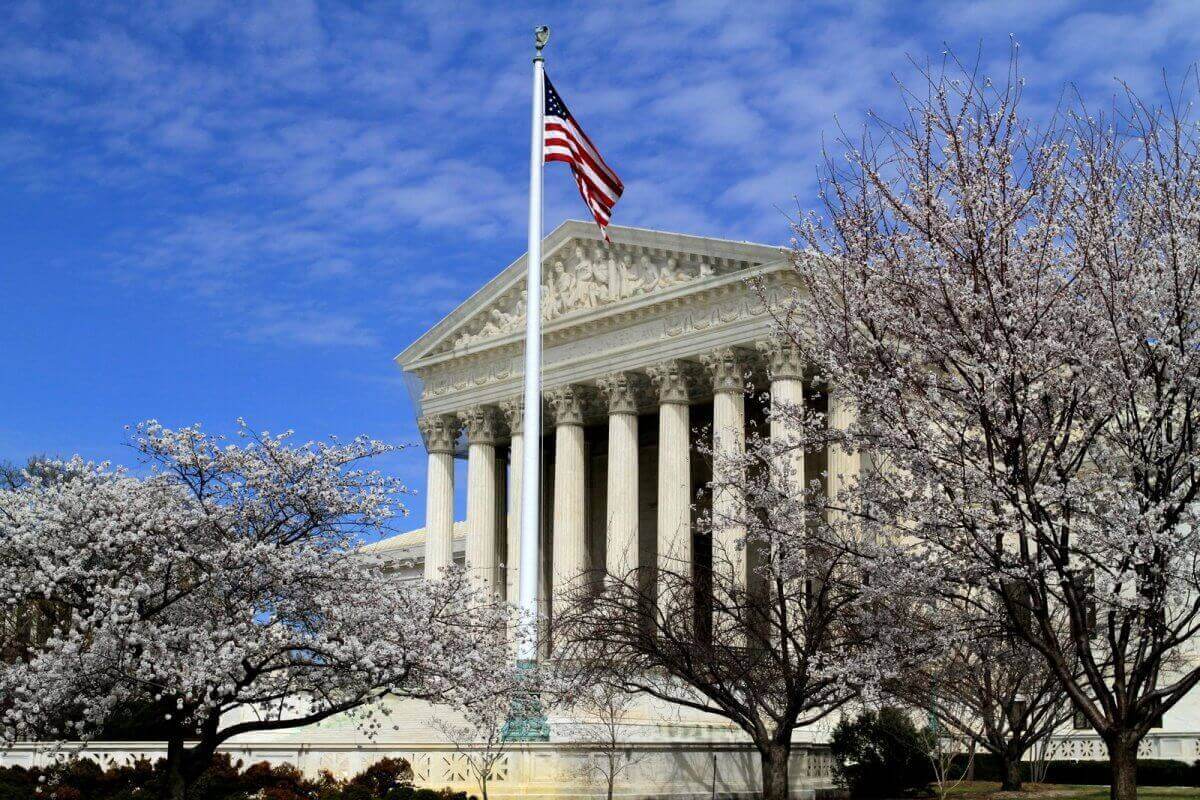
What does the Supreme Court have to say about suing nations hostile to the United States?
Lost among several high-profile cases the Supreme Court recently decided to take—among them Trump’s travel ban and the religious rights battle of Masterpiece Cakeshop—was a curious case that blends terrorism victims, ambiguous laws, and diplomacy.
Rubin v. Islamic Republic of Iran centers around the victims and families of victims of a Hamas terrorist attack in 1997. The attack, a suicide bombing in Jerusalem, was a direct result of material aid from Iran to Hamas. Accordingly, in 2003, the U.S. District court for the District of Columbia awarded very handsome sums to each of the plaintiffs under the terrorism exception to the Foreign Sovereign Immunities Act, which generally prevents litigation against foreign governments in U.S. courts.
However, after the 2003 ruling, the next step was unclear. It’s not like Iran, a country with whom we aren’t exactly friendly, was going to say, “well, I guess we lost in court, here’s your money!” What are the chances the United States would honor a similar ruling in, say, North Korea?
Normally, when a party will not willingly pay up in a suit like this one, the government seizes assets in order to satisfy the judgement for the plaintiff. Currently, the plaintiffs are suing to seize a large amount of ancient Persian artifacts “allegedly owned by Iran,” now held by the Field Museum of Natural History and the Oriental Institute at the University of Chicago. However, FSIA doesn’t just provide jurisdictional immunity for other countries (to which Iran lost its right when it financed terrorism) but it also provides immunity from “attachment and execution,” which is just legalese for seizure of assets.
The rest is for members.
All proceeds go toward publishing more writers and poets.
Free for 30 days, then $3 a month
Become a member
This work is preserved in Merion West’s archive of articles and poems published from 2016 through early 2025. Explore the archive